What if deeper closeness comes less from finding the perfect ritual and more from how you listen and show up for each other? If you care about your partner but still feel distant, it’s natural to wonder how to spiritually connect with your partner without crossing boundaries or asking either person to change their beliefs.
This guide offers practical ways to nurture connection through honest conversation, shared reflection, and everyday attention. You’ll learn how to respect different beliefs, keep spiritual practices voluntary, and recognize when a direct conversation or outside support may be more helpful. Spiritual connection can invite closeness, but it can’t control another person or guarantee a relationship outcome.
Key Takeaways
- Learn how to spiritually connect with your partner while respecting both people’s beliefs and boundaries.
- Explore simple ways to make shared spiritual practices voluntary, while recognizing the value of private reflection.
- Use a gentle routine as an invitation to connect, not a formula that guarantees a particular outcome.
- Revisit shared values and make room for focused attention to nurture connection over time.
- Understand why one quiet ritual or disconnected moment doesn’t define your relationship’s spiritual closeness.
What Does It Mean to Spiritually Connect With Your Partner?
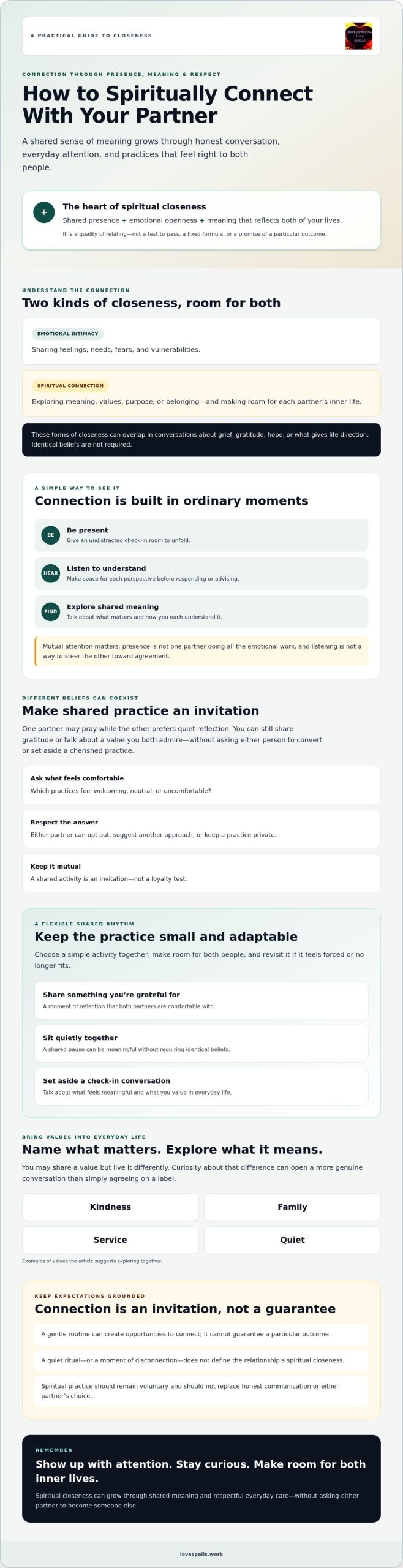
Learning how to spiritually connect with your partner starts with seeing connection as something you shape together: shared presence, emotional openness, and meaning that reflects both of your lives. It might grow through reflecting on what matters to you, showing care in difficult moments, or making time for a practice you both find meaningful. In an interpersonal relationship, spiritual closeness is personal, not a fixed formula.
Spiritual connection is the shared experience of seeking meaning, purpose, or belonging while making room for each partner’s inner life. It doesn’t require constant agreement, intense chemistry, or certainty about where the relationship will lead. Think of it as a quality of relating, not a test to pass or a promise of a particular outcome.
How Is Spiritual Connection Different From Emotional Intimacy?
Emotional intimacy centers on sharing feelings, needs, fears, and vulnerabilities. Spiritual connection often centers on meaning: the values you want to live by, the questions that guide you, or the purpose you find in life together. These forms of closeness can overlap when partners talk about grief, gratitude, hope, or what gives their lives direction. Neither depends on holding identical beliefs.
Can Partners Connect Spiritually if They Have Different Beliefs?
Yes. Curiosity can make room for closeness without asking either person to convert or set aside a cherished practice. One partner might pray while the other prefers quiet reflection. They could still share a moment of gratitude or talk about a value they both admire. The goal isn’t to share every practice, but to understand what matters to each other.
Ask which practices feel welcoming, neutral, or uncomfortable, then listen without trying to negotiate a different answer. A shared activity should be an invitation, not a loyalty test. Either partner can opt out, suggest another approach, or keep a practice private. Respecting that choice can itself express care and trust.
How Do Presence, Listening, and Shared Meaning Build a Deeper Bond?
Spiritual closeness often takes shape in ordinary moments, not only during formal practices. An undistracted check-in after a demanding day gives each person room to share what’s on their mind. Reflecting together on a difficult choice can also reveal what you value and how you want to treat each other. These moments don’t guarantee a particular result, but they create opportunities to meet with attention and care.
Consistent, mutual attention gives partners more opportunities to understand one another and build meaning together. Mutuality matters: presence isn’t one partner doing all the emotional work, and listening isn’t a way to steer the other toward agreement.
Why Does Active Listening Matter in a Spiritual Relationship?
Listen to understand before responding, correcting a detail, or offering advice. If your partner describes feeling unsettled about a decision, you might say, “It sounds like you’re torn between what feels familiar and what feels right. Did I understand?” This gives them room to clarify rather than asking them to accept your interpretation.
Make listening a shared habit. Take turns speaking, ask open questions, and be willing to hear something you don’t immediately relate to. The aim isn’t to secure agreement; it’s to make space for each person’s perspective.
What Can Shared Values and Rituals Add to a Partnership?
Rather than assuming you share the same values, name a few and explore what they mean to each of you. Perhaps you both care about kindness, family, service, or making time for quiet. You may use the same word but live it differently. Exploring that difference can lead to a more genuine conversation than simply agreeing on a label.
A small, adaptable ritual can give those values a place in everyday life. Share something you’re grateful for, sit quietly together, or set aside a regular conversation to check in about what feels meaningful. The Gottman Institute’s guidance on creating an inner life together offers a related perspective on how couples can develop shared meaning through the life they build together. Choose a practice jointly, then revisit it if it feels forced or no longer fits.
If you’d like spiritual perspective alongside your own conversations, you can explore spiritual love guidance as optional support. It shouldn’t replace honest communication or either partner’s choice.
Can Spiritual Practices Help Without Trying to Change Your Partner?
Spiritual practices can offer a way to reflect, express care, or explore shared meaning, but they can’t ethically be used to demand closeness or override someone’s choices. Each partner’s participation, feelings, and beliefs remain their own. If you’re exploring how to spiritually connect with your partner, begin with mutual willingness, not a goal of changing them.
Some practices can be shared, such as a brief reflection or a conversation about what matters to you both. Others can remain personal: you might pray, meditate, or journal privately while your partner chooses a different way to reflect. Neither option proves greater or lesser commitment. Spells or rituals should not be presented as a way to control another person’s thoughts, feelings, or decisions.
Which Practices Can Couples Choose Together?
Keep the invitation simple and specific. Ask whether your partner would like to try a short reflection, share something you appreciate, or talk about a value you want to bring into your relationship. Agree on what feels comfortable and how either of you can stop or change the activity. There’s no universal ritual couples need to follow. A practice is useful only if both people freely choose it.
Private reflection can be meaningful too. Consider what you hope to bring to the relationship without treating your practice as a way to influence your partner in secret or bypass a conversation that needs to happen openly.
When Should You Pause a Practice or Seek Support?
Pause if either person feels pressured, distressed, or unable to say no without fearing punishment or rejection. A shared exercise should not replace clear communication about ongoing conflict, and it isn’t a substitute for support when the relationship feels unsafe. Take those concerns seriously and seek appropriate help from a qualified professional or trusted local support resource.
If recurring disagreements are hard to address together, a spiritual exercise alone may not provide the support you need. A licensed relationship professional can help couples work through persistent communication or conflict concerns. Spiritual guidance may be an optional source of reflection, but it shouldn’t promise a particular relationship outcome or stand in for consent, honest conversation, or professional help when needed.
How to Spiritually Connect With Your Partner: A Simple Shared Routine
If you’re wondering how to spiritually connect with your partner, start with a routine that invites openness rather than demanding a particular feeling. It doesn’t need special materials or a perfect atmosphere. The purpose is to make room for reflection and conversation, with each person free to participate, adapt the steps, or stop.
A simple shared routine is an invitation, not a formula: check in, choose one practice together, take part willingly, then talk about how it felt.
- 1. Settle in. Choose a calm moment and agree to give each other your attention without rushing.
- 2. Check in honestly. Each person describes what connection means to them and what would help them feel heard and respected.
- 3. Choose one small practice. Share a quiet pause, name something you’re grateful for, or reflect on a value that matters to you both.
- 4. Leave room to pause. Agree that either person can stop, skip a step, or suggest another approach without needing to justify the choice.
How Can You Begin With an Honest Check-In?
Start with a gentle, specific question: “What helps you feel close to me?” or “Is there a kind of reflection you’d feel comfortable trying together?” Listen to the answer instead of steering it toward your preferred practice. Then agree on a small activity and how either of you can signal that you’d like to pause. A genuine yes matters more than completing every step.
How Can You Reflect Together Afterward?
After the practice, ask what felt natural, useful, or uncomfortable. Make room for different responses: one partner may enjoy quiet reflection while the other prefers conversation. Consider whether the exercise helped you speak more openly or felt forced. Adjust the routine together, or set it aside. A shared practice should support communication, not replace a needed conversation.
If you’d value spiritual guidance as you consider what feels right for your relationship, you can contact Master Healer Prince Sajjib through the website. Treat any guidance as optional support for reflection, not a way to control your partner or guarantee a relationship outcome.
How to Keep Spiritual Connection Growing in Everyday Life
Spiritual closeness can shift as life and personal needs change. Don’t judge your relationship by one ritual or a quieter season. Revisit the values that matter to you both, notice changes in what each person needs, and make space for focused attention in ways that feel natural. If distance lingers, ask about it directly rather than assuming it has one spiritual cause.
How Can Partners Maintain Connection When Life Gets Busy?
Choose a small check-in that fits a routine you already share, such as talking during a walk or pausing to ask how the other person is doing. Keep it manageable and mutual. Consistent attention matters more than elaborate or compulsory rituals. Either person should be able to suggest a change when a habit no longer feels helpful.
Where Can You Find Optional Spiritual Relationship Guidance?
Love Spells offers spiritual love guidance, relationship advice, love spells, Bring Back Lost Lover Spells, Relationship Healing, and African Traditional Healing. These services should not be treated as a way to control a partner or guarantee reconciliation. Any guidance should remain optional and complement honest communication and mutual effort.
If you’d like to ask about spiritual relationship guidance, contact Master Healer Prince Sajjib through the website. Choose support that respects both partners’ choices and leaves room for open conversation.
Build a Closer Connection One Honest Moment at a Time
Learning how to spiritually connect with your partner isn’t about finding a ritual that guarantees closeness. It’s about making space for honest conversation, listening with care, and exploring meaning in ways that respect both people. Shared beliefs aren’t required, and a quieter season doesn’t mean your connection has failed. Let mutual attention and freely chosen practices guide the way.
Keep your approach simple: ask what helps each of you feel connected, choose a small practice together if you both want to, and revisit it as your needs change. If a practice feels pressured or doesn’t help, pause and talk. Spiritual reflection can complement relationship effort, but it can’t control a partner or replace communication.
Love Spells offers spiritual love guidance and relationship advice, along with remote spiritual services. If you’d like to ask about optional guidance, contact Master Healer Prince Sajjib through the website. Keep choosing curiosity, respect, and presence, one moment at a time.
Frequently Asked Questions
What does it mean to be spiritually connected to your partner?
A spiritual connection can mean sharing a sense of meaning, presence, or values while staying emotionally open to one another. It doesn’t require identical beliefs or constant agreement. Ask your partner what connection means to them, then listen without assuming you share the same definition. From there, explore a conversation or practice you both genuinely want, while respecting either person’s choice to decline.
Can you spiritually connect with your partner if you have different beliefs?
Yes, partners with different beliefs can build shared meaning without adopting each other’s practices. Talk about values you both care about, listen as each person explains what gives life meaning, or choose a neutral activity such as a quiet check-in. Keep the focus on curiosity and mutual understanding. Neither person needs to convert or agree on every spiritual question to feel respected and close.
How do I start a spiritual practice with my partner?
To learn how to spiritually connect with your partner through a shared practice, begin with an open conversation about what feels meaningful and comfortable to each of you. Choose one simple, voluntary activity, such as sharing gratitude or reflecting quietly. Agree that either person can pause or stop. Afterward, talk about what felt useful or awkward, and adjust the practice together. Don’t use it to avoid a relationship concern that needs direct discussion.
Can a spiritual practice make my partner feel closer to me?
A shared practice may create space for attention and conversation, but it can’t guarantee that your partner will feel closer or respond in a particular way. Their emotions and choices remain their own. Focus on honest communication and willing participation rather than treating a ritual as a way to secure affection. If either person feels pressured, pause the activity and talk about what boundaries would feel respectful.
What if my partner is not interested in spiritual practices?
Respect your partner’s choice and ask whether another kind of connection feels comfortable. You can continue private reflection for yourself, but don’t involve your partner in a practice without their consent. Closeness can also grow through everyday conversation, shared time, or learning about each other’s values. Spiritual language or a joint ritual isn’t required. Look for forms of connection that feel genuine to both of you.
When should couples seek help for relationship problems?
Consider outside support if the same conflicts keep returning, communication remains difficult, or either person feels unsafe or pressured. A shared spiritual practice can support personal reflection, but it doesn’t replace appropriate relationship or safety support. Look for a qualified professional whose experience fits the concern, and make sure both partners can participate freely. If someone is in immediate danger, prioritize safety and contact relevant local emergency or support services.