How to Protect Your Relationship from Outside Influence: Practical Steps
What if the biggest threat to your relationship isn’t a family member’s opinion or a friend’s advice, but how you and your partner respond to that pressure? If you’re wondering how to protect my relationship from outside influence, it can feel difficult to balance the views of people you care about with your need to make decisions together.
Outside pressure can take many forms, from repeated advice and family expectations to social media comparisons or friends taking sides. You don’t have to shut everyone out to protect your connection. Start by identifying what is affecting you, then talk with your partner about what feels supportive and what crosses a boundary.
This guide offers practical ways to recognise outside influences, agree on respectful boundaries, and communicate as a team. Spiritual support may complement those steps, but honest communication and both partners’ choices should remain central.
Key Takeaways
- Look for recurring patterns in outside pressure, and distinguish observable behaviour from assumptions about someone’s intentions.
- Use a shared boundary test to tell supportive advice from pressure that shames or repeatedly overrides your choices.
- To learn how to protect my relationship from outside influence, work through five steps together: name the pressure, listen, agree on a boundary, communicate it, and review it.
- Choose calm, specific language that makes your shared decision clear without escalating conflict.
- Spiritual practices may offer personal meaning, but they should complement honest communication and never replace consent or mutual choice.
How outside influence can affect a relationship, and what protection really means
It can be stressful when family, friends, or online voices seem to shape decisions that you believe belong to you and your partner. You can value other people’s care and still feel that repeated advice is creating tension or making it harder to hear each other. That strain is worth discussing, but it doesn’t automatically mean anyone intends harm.
Protection doesn’t mean isolation. It means building mutual respect, speaking honestly, and agreeing on boundaries that give both partners a voice. Outside influence may be practical, emotional, social, or spiritual. Focus on how it affects your conversations and choices as a couple.
For a related perspective, watch this video on protecting a marriage from outside influences:
What counts as outside influence in a relationship?
Outside influence could mean a parent repeatedly questioning a decision, a friend offering advice you didn’t ask for, or online comparisons leaving one partner feeling that their relationship falls short. Social connections carry information and influence in different ways; the overview of Interpersonal ties offers context for how relationships connect people and ideas. Influence becomes concerning when it repeatedly dismisses either partner’s voice or undermines a decision you made together. One uncomfortable comment alone doesn’t establish a pattern or prove a spiritual attack.
Healthy support respects your right to choose; persistent pressure keeps pushing after you’ve made your choice clear. Focus on what someone said or did and how it affected you, rather than assuming you know their motives.
Why shared boundaries are different from cutting people off
Boundaries clarify what you’ll discuss with others, what you prefer to keep private, and which decisions you’ll make together. They can help preserve family and friendship ties while reducing unwanted involvement. For example, you might agree to hear a relative’s advice without promising to follow it, or to discuss a strong opinion privately before responding.
Each partner is responsible for expressing their needs and respecting the other’s choices. If you’re asking how to protect my relationship from outside influence, begin with a shared conversation, not a demand to cut someone off. Protection works best when both partners can speak freely and decide together.
Recognise the outside pressures testing your relationship
A tense conversation with a relative or a friend’s unwanted opinion can sting, but one difficult moment doesn’t necessarily point to a pattern of interference. To understand what is affecting your relationship, look for repeated behaviours and consider their effect on decisions, trust, and communication. Compare what you have each noticed before deciding on a response.
Notice recurring pressure, not just strong opinions
Family and friends may have views about commitment, money, parenting, or how you spend your time. Advice can come from care, habit, or personal experience, so it isn’t automatically harmful. The concern grows when someone keeps pushing after you’ve made a decision, shares private information without agreement, or dismisses one partner’s voice. Psychology Today explores possible reasons behind meddling family members, but possible explanations don’t tell you what is motivating someone in a particular situation.
Repeated boundary-crossing matters more than isolated unsolicited advice. To identify a pattern, describe observable events: “Your parent brought up our finances again after we asked to keep them private.” This is more specific and useful than saying, “They’re trying to control us.”
Separate online comparisons from relationship evidence
Carefully selected photos, public opinions, and friends’ comments can make a couple question decisions that once felt right. A comparison may stir insecurity, but it doesn’t prove your relationship is failing or that someone is deliberately undermining it. Ask what specifically happened, what feelings it brought up, and what you need from each other now.
Spiritual beliefs may be meaningful when you interpret a difficult period, but an unseen cause shouldn’t take the place of direct conversation or observable evidence. If you’re wondering how to protect my relationship from outside influence, compare notes calmly: What was said or done? Has it happened before? How did it affect each of you? What response would respect both partners?
Choose together what stays private
Agree on which subjects you’ll discuss only with each other, who you’ll invite into major decisions, and what information you’re comfortable sharing. Apply the same standard to both sides of the family and to friends. If spiritual reflection is part of your shared approach, you can also explore Protection Spells information as optional support alongside clear communication and mutual choice.
Helpful advice or harmful interference? Use a shared boundary test
Advice can be caring and still feel uncomfortable. Instead of judging someone’s motives, look at what they do, whether they respect your choices, and how their actions affect you as a couple. One unwelcome comment may call for a conversation rather than a dramatic response. Repeated pressure or boundary-crossing deserves closer attention.
Use this comparison as a starting point, not a final verdict:
| Supportive advice | Harmful interference |
|---|---|
| Offers a view while leaving the decision to you both. | Pressures, shames, or repeatedly tries to overturn your decision. |
| Listens when you disagree or decline to discuss a topic. | Continues pushing after you’ve stated a boundary. |
| Respects what you’ve agreed to keep private. | Shares private information without agreement or uses it to influence you. |
Boundaries don’t have to mean hostility, punishment, or cutting off every outside perspective. They clarify what you’ll share and how you’ll respond if a limit isn’t respected. Harvard Health discusses setting boundaries as part of maintaining healthy relationships. Agree on your approach together before speaking with a relative or friend. That way, the conversation reflects a shared decision instead of casting one partner as the problem.
Questions couples can ask before responding
Pause and ask: Can we both speak freely, including when we disagree? Was the advice requested and respectful, and does it leave room for us to choose differently? Has someone repeated contact or shared information in a way that crosses a boundary we already agreed on? Your answers can help you decide whether to clarify a limit, let a one-time comment pass, or seek more support.
When a boundary conversation may need extra support
If the same conflict keeps returning and you can’t resolve it together, consider speaking with a trusted, impartial counsellor. If either partner feels controlled, threatened, or unsafe, seek personal support promptly and prioritise safety. Spiritual practices may be meaningful to some people, but they aren’t substitutes for professional help or safety planning.
For couples asking how to protect my relationship from outside influence, choose a fair next step together, based on specific actions and shared needs rather than assumptions about another person’s intent.
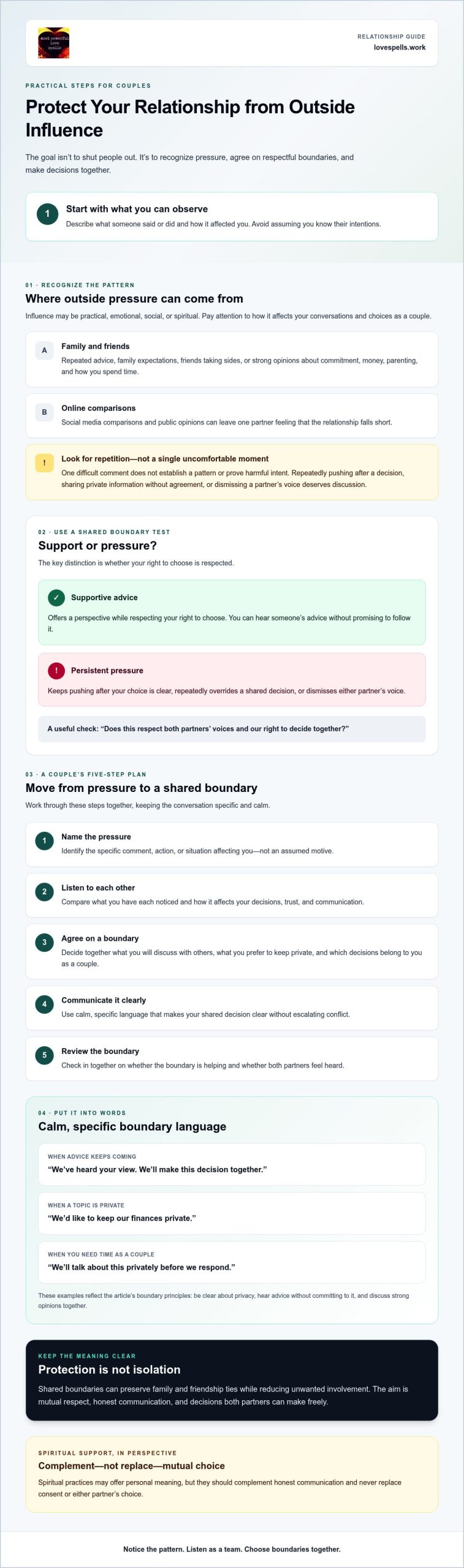
How to protect your relationship from outside influence: five practical steps
Strong boundaries start with a shared understanding, not a heated reaction. Use these five steps to address outside pressure clearly, protect your privacy, and make room for both partners’ perspectives.
- Name the pressure. Describe the specific behaviour, not someone’s character: “When our plans are questioned after we’ve agreed on them, I feel unsettled.”
- Listen to each other. Give both partners space to explain what happened and how it felt. You don’t have to interpret the event in exactly the same way to take each other seriously.
- Agree on a boundary. Decide what feels acceptable around personal information, visits, advice, and involvement in major decisions. For example, you might keep financial details private or discuss parenting choices as a couple before sharing them.
- Communicate it calmly. Use respectful, direct language: “We appreciate your concern, but we’ll make this decision together. Please don’t share our private conversations.”
- Review the boundary. Check in privately and consider whether it’s working for both of you. Adjust it if circumstances change, while keeping the shared purpose clear.
Name the behaviour, listen to each other, choose a boundary, communicate it respectfully, then review it together. This process gives you a steady way to respond, though it can’t guarantee how another person will react.
Agree on the boundary before speaking to others
Before approaching a relative or friend, each partner can name the action that felt difficult and explain its impact without accusation. Then choose a response you can both maintain, such as sharing less detail about a private matter or asking others to offer advice only when invited. Present the boundary as a shared preference, not a demand that one partner enforce alone.
Communicate the boundary and keep checking in
First-person wording can make your request clear without turning it into blame: “We feel more comfortable discussing this between us. Please ask before bringing it up with others.” Avoid threats or ultimatums unless personal safety requires urgent action, and don’t treat isolation from supportive people as a boundary. Set a private time to check whether both of you feel heard and whether the agreement needs adjusting.
If spiritual reflection is meaningful to you both, explore spiritual love guidance as an optional companion to honest conversation and mutual choice. Shared decisions and clear communication remain the practical foundation when considering how to protect my relationship from outside influence.
Where spiritual support can fit alongside relationship boundaries
Prayer, quiet reflection, or spiritual guidance may help you clarify what you hope to bring into a difficult season, such as peace, understanding, or the courage to express your needs. These practices can accompany practical conversations when both partners choose them freely. They can’t guarantee another person’s feelings, control an outsider, or replace consent, honest communication, and agreed boundaries.
Choose spiritual practices that respect both partners’ agency
Before choosing a practice, discuss what you hope it will offer. Are you seeking calm, personal reflection, or support as you consider your next steps? Keep the intention focused on your own choices and the relationship’s wellbeing. Neither partner should be pressured to join a ritual or consultation. If you’d like to learn more, review Love Spells’ Protection Spells information as an optional service overview, not a promise of a particular outcome.
When to seek relationship or spiritual guidance
Recurring arguments or communication difficulties may be easier to work through with a couples counsellor. Spiritual guidance may also be meaningful as a separate, freely chosen source of reflection, but it shouldn’t replace counselling or direct action when those are needed.
If you have questions about spiritual guidance, you can contact Master Healer Prince Sajjib through the website to discuss a consultation. There’s no need to rush. Choose support that respects both partners’ agency and keeps honest conversation at the centre.
Move forward with shared trust and clear choices
Protecting your relationship doesn’t require shutting out everyone who cares about you. Notice recurring pressure, focus on what people actually say or do, and decide together which boundaries will help you both feel heard. A calm conversation can turn outside tension into a chance to strengthen trust and clarify what you want as a couple.
If you’re asking how to protect my relationship from outside influence, remember that a strong foundation includes mutual respect, honest communication, and choices neither partner is pressured to make. Prayer, reflection, or spiritual guidance may offer personal meaning when freely chosen, but they can’t replace consent or guarantee another person’s feelings.
If spiritual support feels right for you, contact Master Healer Prince Sajjib through the website to discuss spiritual guidance. Reach out when it feels comfortable for both of you, and choose support that keeps honest conversation and mutual choice at the centre.
Frequently Asked Questions
How do I protect my relationship from family interference?
Start by discussing specific events privately with your partner, rather than asking them to choose between you and family. If you’re wondering how to protect my relationship from outside influence, agree on which decisions you’ll make as a couple and what information you want to keep private. Communicate your boundary respectfully while leaving room for supportive family involvement. If the same conflict keeps recurring, consider speaking with an impartial counsellor.
Can friends or family ruin a healthy relationship?
Friends or family can add pressure, but their opinions alone don’t determine a relationship’s future. What matters is how you and your partner communicate, make decisions, and respond to repeated boundary-crossing. Don’t assume one disagreement proves someone intends harm. Discuss the specific behaviour and its effect on both of you, then agree on a fair response. Protecting your connection is a shared practice, not a reason to reject every outside perspective.
What are signs that someone is interfering in my relationship?
Possible signs include repeated attempts to override decisions, sharing private information without agreement, or pressure that makes one partner feel unable to speak freely. Context matters, so look for patterns rather than judging one comment in isolation. Explain to your partner what happened and how it affected you. Then decide together whether a clearer boundary would help, without assuming you know the other person’s motives.
How do I set boundaries with in-laws without causing conflict?
Agree with your partner on the boundary and the change you’re asking for before speaking with in-laws. Use calm, specific language, such as, “We’ll make this decision privately as a couple.” Avoid blame and keep your message consistent. You can’t control another person’s reaction, but respectful communication can make your position clearer and reduce mixed messages. Leave room for family involvement that you both welcome and find supportive.
Should couples keep relationship problems private from friends and family?
Not necessarily. Trusted support can help, but agree on which details are private and whom you both feel comfortable involving. Avoid sharing information to recruit people against your partner or pressure them into a decision. Privacy shouldn’t prevent someone from seeking help. If you feel controlled or unsafe, reach out for confidential support from someone you trust or an appropriate local service rather than treating secrecy as an absolute rule.
Can prayer or a protection spell help protect a relationship?
Prayer or spiritual practice may offer personal meaning if it fits your beliefs, but it can’t be promised to control another person or guarantee a relationship outcome. Love Spells offers services including Protection Spells, Relationship Healing, and African Traditional Healing; these should not replace consent, direct communication, or practical boundaries. Before choosing a Love Spell Caster or Spiritual Healer, ask whether the approach respects both partners’ agency and avoids promises of guaranteed Marriage Restoration.
When should we seek professional help for outside relationship pressure?
Consider support when the same disagreements keep returning, conversations feel difficult to manage, or either partner feels isolated, controlled, or unsafe. A qualified counsellor can help you communicate and work through boundaries. Spiritual guidance may be meaningful as an optional reflection, but it shouldn’t replace counselling or safety support. If considering services described as Rebinding Love Spells, clarify what they involve and avoid any approach that promises to control someone’s feelings.